
The Psychology of Money: Why Your Brain Is Working Against You
Most money problems aren't caused by a lack of intelligence. They're caused by emotions, habits, and beliefs we rarely notice. Learn how the psychology of money shapes every financial decision you make.
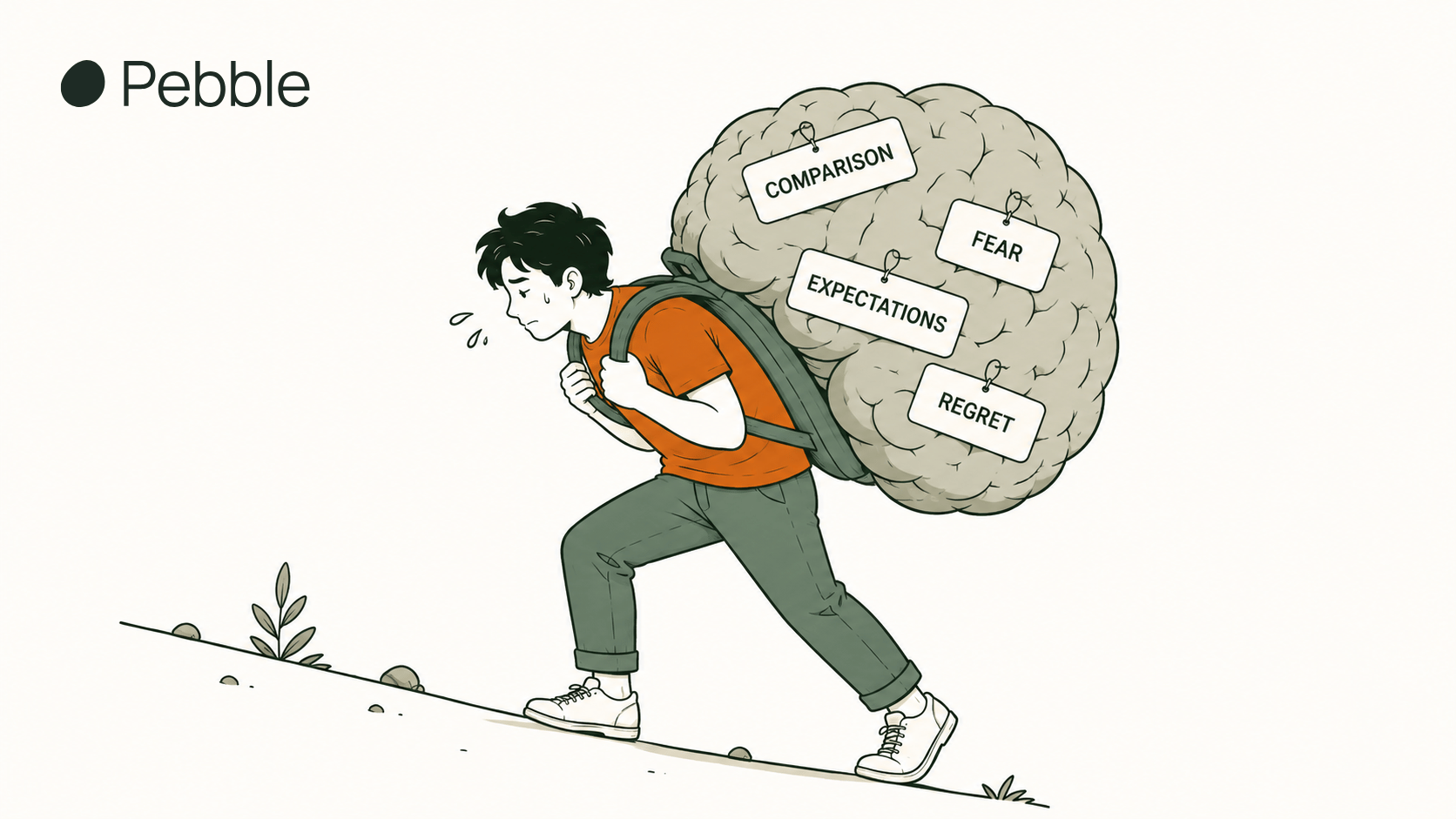
You've read the articles. You know inflation is quietly eating your savings. You've told yourself "I'll start this month" approximately twelve times and yet, here you are.
That's not a character flaw. It's not laziness. There's something more specific happening and once you understand it, the freeze starts to make complete sense.
What Is the Psychology of Money? (And Why It Has a Fancy Name)
There's a term worth knowing: behavioural finance.
It sounds academic. It isn't. Behavioural finance is simply what happens when economists and psychologists started studying the same question: why do intelligent, educated people consistently make money decisions that don't add up on paper?
The answer they kept finding: because we're human.
Money decisions aren't made on spreadsheets. They're made at the dinner table after a long day. They're made when a relative mentions their cousin's plot that tripled in value. They're made when you've been meaning to open an investment account for six months and the guilt of not having started yet makes it even harder to start.
The formal name for this field is behavioural finance. The plain version: your brain is full of patterns, shortcuts, and inherited beliefs that shape every money decision you make often without your realising it.
Understanding those patterns is the whole point of this piece.
Your Brain Wasn't Built for This
Before you judge yourself for not starting, it helps to understand something: your brain wasn't designed for modern money decisions. It was designed for survival.
For most of human history, the smart move with a resource was to use it now not set it aside for abstract future benefit. The brain that hoarded food for a winter that might not come sometimes starved before the winter that did. Spending quickly, acting immediately, avoiding loss these were features, not bugs.
That wiring doesn't disappear just because you have a salary and a smartphone. It runs quietly in the background, and it explains a lot.
Loss aversion: why losing Rs. 1,000 hurts more than gaining Rs. 1,000 feels good
Behavioural researchers Daniel Kahneman and Amos Tversky spent decades studying how people actually make decisions not how they're supposed to. One of their most consistent findings: the pain of losing something feels roughly twice as intense as the pleasure of gaining the same thing. This is called loss aversion, and it earned Kahneman a Nobel Prize in Economics.
For investing, this creates a specific problem. Starting means risking something even a small amount. And your brain, wired to avoid loss, will vote against starting every time. Not because starting is actually dangerous. But because the possibility of being wrong feels worse than the certainty of doing nothing.
This is why people leave money in accounts they know are losing value to inflation. The savings account isn't comfortable because it's good it's comfortable because it's familiar, and familiar doesn't trigger the loss-aversion alarm.
Present bias: why "next month" always makes sense
Your brain dramatically overvalues now over later. Give someone a choice between Rs. 1,000 today and Rs. 1,500 in three months, and most people take the money today even when the maths clearly favours waiting.
This is called present bias, and it's why "I'll start investing next month" is one of the most well-worn sentences in personal finance. It's not a lie when you say it. It genuinely feels true. Next month will be better there'll be more money, more clarity, fewer competing demands.
Next month arrives and says the same thing.
Present bias doesn't mean you're weak-willed. It means your brain is doing what it evolved to do: prioritise the immediate and concrete over the distant and abstract. The antidote isn't willpower. It's reducing the friction so the decision doesn't require fighting your own brain every time you think about it.
Status quo bias: why doing nothing feels responsible
There's one more pattern worth naming: status quo bias. The tendency to treat inaction as the safe default.
Keeping money in a savings account doesn't feel like a decision it feels like the absence of a decision. Investing, on the other hand, requires actively doing something, which means actively risking being wrong.
So the brain defaults to the status quo. Not because it's better. Just because it's already there.
In a low-inflation environment, the status quo might genuinely be fine. In Pakistan, where inflation has consistently eroded the real purchasing power of savings , the status quo has a real, measurable cost. But that cost is invisible and gradual and loss aversion means the visible risk of action will always feel larger than the invisible cost of inaction.
The Pakistani Money Mind: What This Actually Looks Like Here
The three patterns above are universal documented across every culture and income level. But they take specific shapes depending on where you grew up, what you were told, and what you saw working around you.
In Pakistan, those shapes are very specific.
"Beta, zameen khareed lo"
Real estate as the only "real" investment isn't just a preference it's a cultural inheritance. For a generation of Pakistanis, buying a plot genuinely was the right call: property appreciated, financial markets were opaque or inaccessible, and land was something you could see and stand on. That experience created a default that got passed down: zameen (land) is safe; markets are gambling.
This is status quo bias with a cultural costume. It isn't irrational on its own terms it's a pattern that made sense in the context that created it. The honest question now is whether that context still holds for you.
The case for property:* it's tangible, widely understood, and has been a strong hedge in certain Pakistani cities and time periods. For the right person with the right capital, it makes sense.
The honest case against : as an investment for an ordinary saver starting today: it requires significant capital upfront, it's almost entirely illiquid (you cannot sell 5% of a plot when you need Rs. 50,000), it carries transaction costs, legal risk, and returns that vary enormously by location and timing. For someone earning a salary and wanting to start building wealth now, a plot that's years away isn't the answer to the question she's actually asking.
Both things can be true.
The committee (BC): the informal wealth system worth understanding
The committee also called a BC, short for the Rotating Savings and Credit Association (ROSCA) model is one of the most interesting money mechanisms in Pakistan, and it deserves genuine analysis rather than either dismissal or uncritical praise.
What it does well:
It enforces savings discipline through social accountability. People commit to a committee they would never commit to their own savings account, because the social contract removes the internal friction. You show up because others are counting on you. Behaviorally, that's genuinely powerful, and research on peer-based savings is largely positive.
What it doesn't do: your money doesn't grow. There is no return. The risk is concentrated entirely in the trustworthiness of the organiser and every member. If someone defaults or disappears, there is no regulatory body to call.
If a committee is helping you save consistently, that is real and worth keeping. If it's become a substitute for examining the rest of your financial picture, that's worth examining too.
The savings account: the responsible choice that stopped being enough
Keeping money in a savings account used to be solid advice. It is safe, accessible, and earns something. The psychology here is the psychology of responsibility putting money aside feels like doing the right thing.
The catch: in an environment where inflation consistently runs ahead of savings account returns, the "responsible" choice quietly costs you every year. Your money is there. It just buys less.
This isn't dramatic it's compound mathematics working against you rather than for you. And because the erosion is gradual and invisible, it never triggers the same alarm that a bad investment would. Status quo bias keeps it feeling safe long after it stopped being enough.
The family money script
What were you told about money growing up?
Not the explicit lessons the ambient ones. The way the topic was handled or avoided. What investing meant in your household. Whether the people around you saw financial markets as opportunity or danger. Whether money was something you discussed openly or kept private.
In many Pakistani households, a few scripts run quietly in the background:
- Investing is gambling : often a response to real experiences of loss or scam, passed down as protection
- Rich people are corrupt : a philosophical stance that makes wealth-building feel morally complicated
- Save, don't invest : the conservative safety-first instinct, entirely sensible in a high-uncertainty environment
- Debt is shameful : true in some contexts, counterproductive in others
None of these were invented out of nothing. They came from real experiences, real observations, real history. But they run in the background of your financial decisions whether you've consciously chosen them or not.
Recognising a script isn't the same as abandoning it. Sometimes the right answer is "actually, this still serves me." Sometimes it's "I inherited this, but it's not mine to carry." The goal isn't to discard your family's wisdom. It's to examine it clearly enough to decide.
The Shame Nobody Talks About
There is a layer underneath all of this that almost never gets named because naming it requires admitting it's there.
Many people feel embarrassed about where they are with money.
Not broke. Just behind. Behind where they think they should be at this age, with this income, with this level of education. Surrounded by people who seem to have it figured out, holding a savings account they know isn't really working, and not starting because starting would mean admitting they haven't started yet.
The shame is self-silencing. People who feel behind don't broadcast it. They don't ask the questions they need to ask, because the question would reveal the gap. And the longer they wait, the larger the gap grows, and the harder it becomes to begin.
Here's what needs to be said clearly: not knowing this stuff is not a personal failure.
Personal finance was never formally taught in Pakistani schools. What most people know about money came from their families, their social circles, or the internet and the quality of what got passed down had nothing to do with intelligence and everything to do with circumstance. Someone whose parents were financially literate had a head start that had zero to do with how capable or hardworking they are.
You are not behind because you are bad with money. You are behind because this information was never handed to you in a useful form.
That is a different problem. And it is a solvable one.
What You Can Actually Do About It
Understanding the psychology matters. But knowing *why* you freeze doesn't automatically unfreeze you — it just makes the freeze less mysterious. Here is what to actually do with this.
Name the fear before you try to fight it
Most people skip this step. They try to overcome the fear of investing without identifying what, specifically, the fear is.
Is it fear of losing money? Fear of making the wrong choice and feeling stupid? Fear of trusting a platform and being scammed? Fear of what your family will say? Fear of admitting, by finally starting, that you should have started earlier?
These are different fears and they need different answers. Loss aversion responds to understanding how something is structured and protected. Scam fear responds to transparency and verifiability. Family judgment responds to community finding people who are doing the same thing and seeing that it is working.
ague fear is the most paralysing kind. Specific fear is workable.
Make the first action laughably small
Loss aversion fires harder the larger the perceived risk. Rs. 500 is the right starting size not because it builds wealth fast, but because it gives your brain almost nothing to grip.
At Rs. 500, there is nothing to catastrophise. You are not staking your financial future. You are not making an irreversible decision. You are finding out what it actually feels like to do the thing and that experience is more valuable than the Rs. 500 itself.
The psychology of starting is genuinely different from the psychology of investing large. Start small enough that the fear does not show up, and you have done the hardest part. Every step after the first is easier than the first.
Find one anchor belief and one anchor community
You need a philosophy that holds in the bad moments, not just the good ones.
Not a prediction a principle. Something like: I am building slowly and consistently, not trying to get rich fast. Or: I understand what I own, and I have verified how it is protected. When things get uncomfortable (and they will), that anchor is what keeps you from abandoning the plan.
The community piece matters too. We take far more of our financial cues from the people around us than we realise. If everyone you know is buying plots and joining committees, that is your reference point for what is normal. Being around even a few people who are investing, learning, and talking about money openly changes the psychological baseline quietly, over time, in ways that add up.
That is part of why we built Pebble the way we did: starting with digital gold, keeping minimums low, and making the structure fully transparent so you can verify it yourself, not just trust it. The whole design is about removing friction at exactly the moment the psychology is loudest.
The honest caveat, stated clearly: understanding your money psychology is necessary but not sufficient. You can have perfect self-awareness about your loss aversion and still not know which investment is right for you, whether it is halal, or whether the platform you are using is regulated and legitimate. Mindset without the right mechanics does not close the gap. The rest of this blog is for that part.
The Honest Bottom Line
Your brain is not broken. It is doing exactly what it evolved to do protect you from immediate loss, default to the familiar, prioritise now over later. The problem is not your brain. It is that those instincts were calibrated for a different environment, and nobody told you to update them.
Understanding the psychology of money does not make you a better investor overnight. It makes you a slightly more compassionate observer of your own decisions — which turns out to be a surprisingly useful place to start.
The specific fear you have is specific. The inherited belief you are carrying is examinable. The first action you need to take is smaller than your brain is telling you it needs to be.
You do not need to be fearless. You just need to be one step further than you are right now.
Frequently Asked Questions
What is the psychology of money, in plain terms?
It is the study of how emotions, habits, and inherited beliefs shape the way we earn, spend, save, and invest often more than logic does. Behavioural economists found that people consistently make financial decisions that do not add up mathematically, not because they are unintelligent, but because their brains are responding to fear, identity, and past experience rather than to a spreadsheet.
Why do smart people make bad money decisions?
Because intelligence and financial behaviour are separate skills. Your brain uses mental shortcuts called cognitive biases that evolved to handle immediate threats, not long-term compounding. Loss aversion means losing Rs. 1,000 feels worse than gaining Rs. 1,000 feels good. Present bias means now always beats later. These are predictable patterns that affect everyone, regardless of education level or income.
Is it normal to feel anxious or embarrassed about money?
Yes and far more common than most people admit, because financial shame is self-silencing. People who feel behind do not broadcast it. In Pakistan especially, money is treated as private, and personal finance was never formally taught, which means most of what people know came from family for better or worse. Feeling anxious about money is not a character flaw. It is a gap in what most of us were ever taught.
Why do many Pakistanis tend to prefer property and gold over financial markets?
Both reflect a deep, culturally reinforced trust in tangible assets things you can see, touch, or stand on. Markets feel abstract; a plot or a gold bangle feels real. That preference has a psychological name (status quo bias combined with loss aversion) and a cultural history rooted in decades of inflation, currency volatility, and limited regulated investment options. It is a rational response to the environment people grew up in and it deserves honest examination, not dismissal.
What is loss aversion and why does it matter for investing?
Loss aversion is the documented tendency established by Kahneman and Tversky's Nobel Prize-winning research to feel the pain of a loss roughly twice as intensely as the pleasure of an equivalent gain. For investing, this means the fear of losing Rs. 500 feels stronger than the appeal of gaining Rs. 500. It explains why people stay in savings accounts that lose real value to inflation: the familiar feels safer than the unfamiliar, even when the maths says otherwise.
How do money beliefs from childhood affect my financial decisions today?
Significantly and mostly below the surface. If you grew up hearing "investing is gambling," "rich people are corrupt," or "just keep it in the bank," those are not just phrases. They form a framework your brain uses to evaluate money decisions without your consciously realising it. Recognising those inherited scripts is the first step — not to discard your family's wisdom, but to decide consciously which beliefs still serve you and which ones are worth examining.
How do I stop overthinking money decisions and actually start?
The overthinking usually has a specific shape identify it. Is it fear of loss? Fear of trusting the wrong platform? Fear of making the wrong choice? Once the fear is specific, it becomes addressable. Then make the first action small enough that the fear does not have enough to grip. You are not trying to make a perfect decision. You are trying to make a first one and the first one is almost always smaller than your brain is telling you it needs to be.
About Pebble
Pebble helps Pakistanis take control of their money through honest, beginner-friendly education. We believe getting better with money isn't about being rich, becoming a finance expert, or making perfect decisions. It's about understanding how money works, building healthy financial habits, and taking small steps consistently over time.
Through practical guides, simple explanations, and real-world examples, we help people feel more confident with their finances and a little more in control every month. No jargon. No hype. Just clear, honest guidance to help you get better than where you started.