
Is Digital Gold Halal in Pakistan? An Honest Look
Digital gold can be Shariah-compliant — if it's fully paid, allocated, and immediately yours. Here's the honest framework, the red flags, and why the ruling is yours to make.
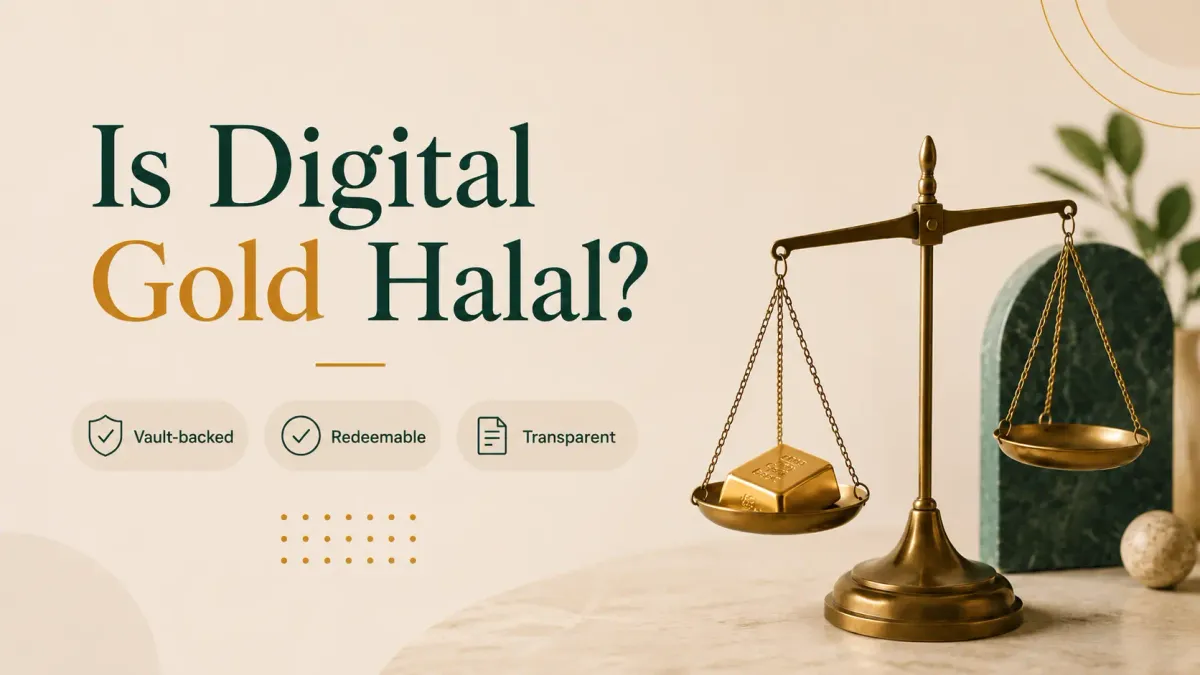
Digital gold can be Shariah-compliant, but it isn't automatically so it depends on how the product is built. Gold is a ribawi item, so scholars require full ownership, immediate payment, and real possession of allocated gold. Fully-paid, vault-backed digital gold meets these conditions far better than leveraged "gold trading." Pebble doesn't certify anything as halal; the ruling is between you and a scholar you trust.
This is the question that stops a lot of Pakistanis before they start, and it deserves a straight answer rather than a sales pitch. So let's separate what scholars actually require from what marketing claims, and give you the exact questions to take to your own scholar.
Key Takeaways
- Whether digital gold is halal depends on the structure, not the word "digital." The Shariah test is full ownership, immediate payment, and real possession of allocated gold (AAOIFI Shariah Standard 57).
- Fully-paid, allocated, vault-backed gold you can take delivery of has a strong case that many scholars accept; leveraged or margin-based "gold trading" (CFDs, futures) generally does not.
- Pebble does not certify any product as halal. We explain the structure; you and a qualified scholar make the ruling.
*In Islam, the question is rarely "is gold halal?" — gold is halal. The real question is whether the contract is.
Is digital gold halal? The honest answer
It can be, and it can not be as the same label hides two very different products. "Digital gold" can mean fully-paid ownership of real, allocated gold in a vault. It can also mean a leveraged bet on the gold price where you never actually own metal. The first has a strong Shariah case; the second usually doesn't. The word on the app is identical; the underlying contract is not.
So the responsible answer isn't a blanket "yes" or "no." It's: what exactly are you buying, and does that contract meet the conditions? This article gives you those conditions so you can judge a specific product and then confirm with a scholar, because that ruling is theirs to give, not ours.
What makes a gold transaction halal in Islam?
Gold is one of the ribawi commodities named in the Sunnah, which means its trade carries strict conditions designed to prevent riba (interest) and gharar (excessive uncertainty). Across the major standards, three conditions come up again and again (AAOIFI Shariah Standard 57 on Gold):
- Full ownership. You must actually own the gold, its value and its risk not merely bet on its price.
- Immediate payment. The price must be paid at the time of sale, not deferred or financed.
- Possession (qabd). You must take possession of the gold, either physically or constructively meaning it is allocated to you and at your disposal, even if it stays in a vault.
The core principle scholars repeat: with a ribawi item like gold, any delay in either the payment or the delivery makes the deal impermissible. The transaction must complete on the spot.
There's an important nuance for buying gold with rupees. Several scholars, including Mufti Taqi Usmani and others from Pakistan and India, hold that exchanging gold for paper currency is not governed by the strict rules of bay' al-sarf (gold-for-gold or gold-for-silver). On this view, the sale is valid as long as possession takes place from one side — you pay immediately, and the gold becomes constructively yours (Islamic Finance scholarly positions, 2025).
The red flags that make "gold" impermissible
The problem is rarely gold itself it's the structure wrapped around it. Watch for these, because they're common in apps that advertise "gold trading":
- Leverage or margin. If you put down a fraction of the value and borrow the rest, you don't fully own the gold and you're paying for borrowed money. This is the single biggest red flag.
- CFDs and futures. Contracts that settle in the future, or that track the price without delivering metal, breach the immediate-settlement and possession conditions. (PMEX's leveraged gold futures fall here which is why a saver should buy fully-paid gold, not trade futures.)
- Unallocated "paper" gold. If no specific, audited gold is assigned to you — just a balance the company promises to honour — there's no real possession.
- Deferred payment or "buy now, pay later" gold. Any delay in settling the price breaks the rule.
- Short selling. Selling gold you don't own is not permitted.
If a product carries any of these, its Shariah case weakens sharply, regardless of how "halal" the marketing sounds.
Questions to ask before you buy (and take to your scholar)
You don't need to be a mufti to do due diligence. Take these questions to the platform, then take the answers to a scholar you trust:
- Is the gold fully paid at purchase, with no leverage or instalments?
- Is real, allocated gold assigned to me, audited and held in a named vault?
- Can I take physical delivery, and under what conditions?
- Does the product settle immediately, or is it a future-dated/CFD contract?
- Is there a Shariah board or scholar who has reviewed this specific product, and can I see their statement?
Pebble's position, stated plainly: we don't issue Shariah rulings and we don't label any product "halal." What we can do is describe the structure honestly and point you to the right questions. The judgement — for your situation, your madhhab, and your conscience — belongs to you and a qualified scholar. When in doubt, ask before you buy.
To see how a regulated, fully-paid product is actually structured, read what is digital gold and how it works, and on the safety side, is digital gold safe?
Frequently Asked Questions
Is digital gold halal in Pakistan?
It can be, depending on the structure. Fully-paid, allocated, vault-backed gold that you possess immediately meets the main Shariah conditions many scholars accept. Leveraged or future-dated "gold trading" generally does not. Pebble doesn't certify any product; confirm your specific product with a scholar.
What makes gold trading haram?
The structure, not the gold. Gold is a ribawi item, so any delay in payment or delivery makes the deal impermissible. Leverage, margin, CFDs, future-dated settlement, unallocated paper gold, and short selling are the common features that make "gold trading" haram.
Does buying gold with rupees count as bay' al-sarf?
Several scholars, including Mufti Taqi Usmani, hold that gold-for-paper-currency is not governed by the strict bay' al-sarf rules that apply to gold-for-gold. On this view, the sale is valid if you pay immediately and take constructive possession. Practices vary, so consult your scholar.
Is digital gold on PMEX halal?
PMEX offers both fully-paid gold and leveraged gold futures. The fully-paid, allocated, vault-backed holding has a far stronger Shariah case than the leveraged futures contract, which most scholars would not accept. The structure you choose decides the answer — verify it, then ask a scholar.
Does Pebble guarantee a product is Shariah-compliant?
No. Pebble does not certify anything as halal or issue Shariah rulings. We explain how products are structured and what conditions scholars require. The ruling for your situation rests with you and a qualified scholar you trust.
The bottom line
"Is digital gold halal?" is really two questions in one: is gold halal (yes), and is this contract halal (it depends). Strip away the app and the marketing, and the test is timeless — full ownership, immediate payment, real possession. Fully-paid, allocated, vault-backed gold meets it well. Leverage and paper promises don't.
Do the five-question check. Read the structure, not the slogan. Then take it to a scholar and decide with confidence rather than doubt — because peace of mind is part of the point of investing the halal way.
Sources
- AAOIFI. "Shariah Standard No. 57: Gold and its Trading Controls." Accounting and Auditing Organisation for Islamic Financial Institutions. Retrieved 2026-06-14.
- World Gold Council. "Shariah Standard on Gold (developed with AAOIFI)." Retrieved 2026-06-14, from https://www.gold.org/gold-standards/shariah-gold
- Islamic Finance scholarly positions on online gold and possession (Mufti Taqi Usmani; Darul Iftaa; IslamQA). Retrieved 2026-06-14, from https://forum.islamicfinanceguru.com/t/fatwa-is-it-halal-to-buy-gold-online/36
- Pakistan Mercantile Exchange (PMEX). "Milli Tola Gold Futures Contract Specifications" (fully-paid vs leveraged structure; allocated vault gold). Retrieved 2026-06-14.